Showing posts with label insect. Show all posts

Monday, January 2, 2017

The Hidden Colors of Butterflies

Prepona praeneste buckleyana (male) in human visible light (left) and UV (right).

Butterflies are known for their brilliant display colors, but did you know that these colors are even more complex than what we see? The tiny scales on butterfly wings are capable of reflecting ultraviolet light (UV), and their eyes are capable of detecting it with UV sensitive opsins.
 By taking photographs of UV light, we can see some of these hidden patterns, and try to interpret the colors they might perceive. The image at the top of this post, for example, reveals a UV pattern across the middle portion of the wing. The picture below demonstrates how this UV can contribute to colors as the butterflies perceive them. The forewing is orange to our eyes, but it has bright UV reflectance as well, so this color would better be described as a UV-orange (although I’m sure UV sensitive organisms would come up with some better names if they could). The hindwing, however, is just yellow as we know it, with no UV.

Hebomoia leucippus in human visible light (left) and UV (right).

I’d also like to clarify that the UV colors of butterflies are the result of UV reflectance, which is something entirely different than fluorescence (where UV light seems to make an object glow, like clothes under a blacklight). I’ll make another post about fluorescence in the future, as there are some very interesting examples of biofluorescence in nature.
Want to learn more about how these colors are made? Butterfly scales are capable of producing structural coloration through interference mechanisms such as diffraction gratings. These typically reflect short wavelength light, such as the blue of Blue Morphos and UV in the butterflies above. The wing membrane below the scales may contain various pigments which also contribute to the color of the wing, and the interaction of structures and pigments increases the butterfly’s potential color gamut. SmarterEveryDay made a very interesting video about butterfly structural coloration, which I recommend watching.

Sunday, July 31, 2016

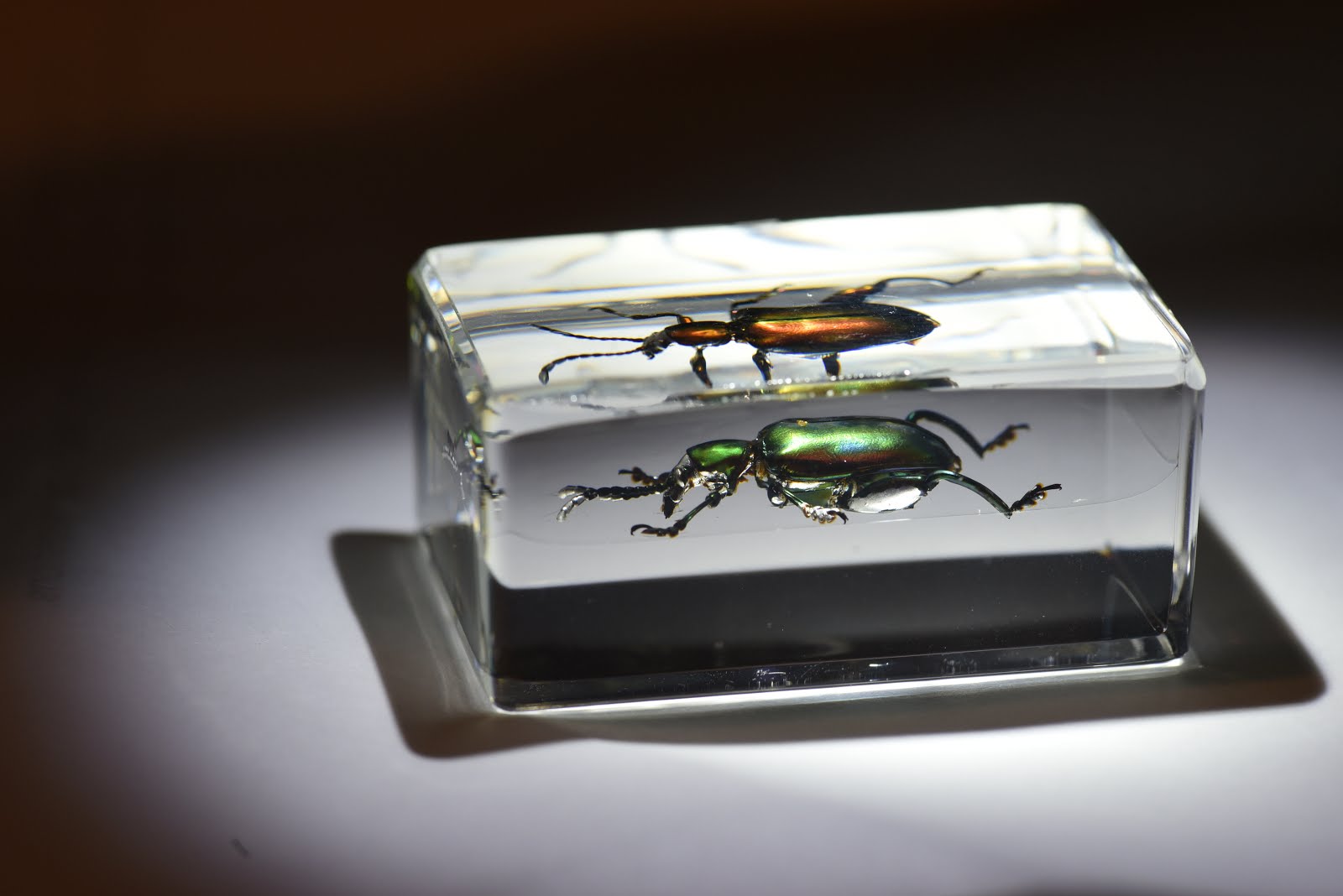
Jeweled Frog Beetle Iridescence

Copyright John Cavagnaro

I've recently been getting into insects, mainly because of how well their coloration holds up when preserved. Here is one of my first acquisitions: a Jeweled Frog Beetle (Sagra sp.), suspended in acrylic, sold as part of a cheap variety pack on Amazon. The picture online looked pretty drab, but I know that these beetles can have some interesting metallic coloration and figured that it was worth checking out given the low price.

Two day later I had my box, and the first thing I did was shine a flashlight on my new frog beetle. And it had color! A coppery shell which melted into metallic greens and blues as I moved my flashlight around the cube. The carapace is iridescent; the colors change depending on the angle of incoming light and the viewing angle.

When you shine a light from above, the entire beetle appears reddish-bronze. When you move the light off to the side, the beetle reveals metallic greens and blues, even flashes of purple if the angle is steep enough.

Due to the refraction on the sides of the acrylic, I was able to position the beetle in such a way that both the coppery top view, and the greenish view from the side were visible at the same time, with light only coming from a single direction. It turned out that this cheap resin cube could actually enhance the viewing of this beautiful insect, by letting you see the iridescence from two angles at once.

As to the function of the beetle's colors and how they are perceived by other beetles and potential predators, we don't really know. Maybe the browns and greens of the iridescence provide good camouflage on a plant. Maybe the colors are signals to conspecifics, advertising fighting ability to females and rival males (they use their huge hind legs to wrestle). Maybe the changing color startles predators such as birds when the beetle opens its wings. Further study is needed to elucidate the function of coloration in this group.

I have been studying color in other animals (lizards) using standardized photography, but my methods aren't really suitable for this beetle. Shiny, strongly iridescent objects are difficult to measure, and this group's visual system hasn't been studied. Additionally, the resin block itself might influence the color (for example, it absorbs UV light, which can be an important component of color). Other preservation methods, like mounting under a glass frame, leave the specimen available for proper color analysis, so I don't expect to be picking up too many more insects in acrylic, but the cube serves this beetles iridescence well!